You get out of your chair feeling pretty good.
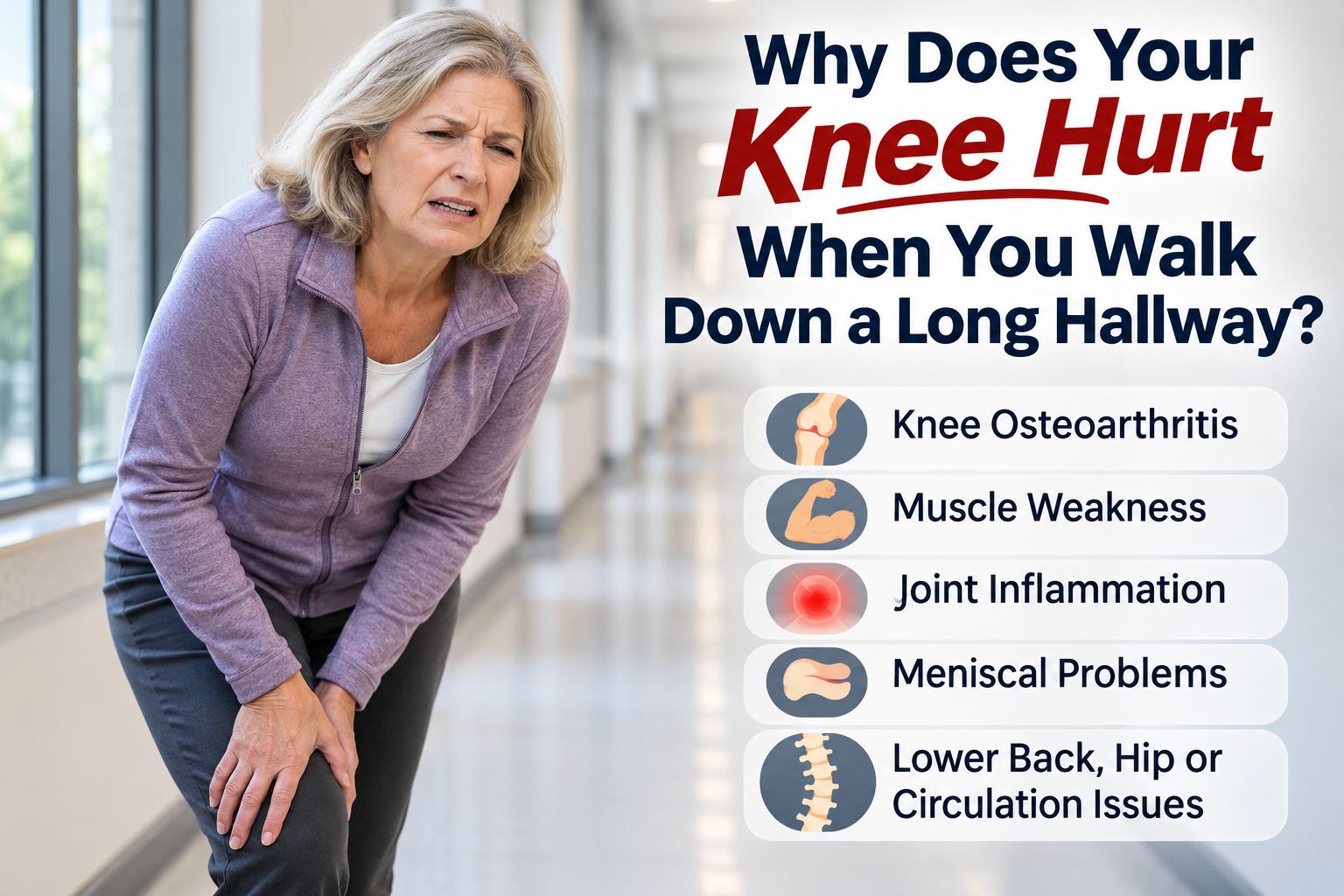
You start walking down a long hallway at work, in a hospital, or at a doctor's office.
The first few steps are fine.
But halfway down the hallway, something changes.
Your knee begins to ache. Maybe it feels tight, stiff, or increasingly uncomfortable. You might notice yourself slowing down, shortening your stride, or looking for somewhere to sit.
By the time you reach the other end, you're wondering why such a simple activity has become so difficult.
If your knee starts hurting the longer you walk, there may be several explanations—and not all of them mean you need knee replacement surgery.
One of the most common causes of knee pain in adults over 50 is osteoarthritis.
Knee osteoarthritis develops as the joint undergoes structural changes involving cartilage, the underlying bone, synovial tissues, and other joint structures.
Symptoms may include:
During walking, your knee repeatedly absorbs and transfers forces through the joint.
For someone with symptomatic osteoarthritis, continuous weight-bearing activity may gradually increase discomfort.
Interestingly, the severity of arthritis on an X-ray does not always predict how much pain someone experiences.
Some individuals with significant joint-space narrowing walk relatively comfortably, while others with less advanced changes experience substantial limitations.
Your knee may tolerate the first few minutes of activity reasonably well.
As walking continues, repetitive joint loading, muscle fatigue, and irritation of sensitive joint tissues may contribute to increasing discomfort.
This is one reason patients frequently describe pain that develops after walking a certain distance rather than immediately upon standing.
Your quadriceps are the large muscles along the front of your thigh.
They play an essential role in controlling knee movement, absorbing forces, and maintaining stability during walking.
When these muscles become weak, the knee may have less muscular support during repetitive activity.
People with chronic knee pain sometimes develop arthrogenic muscle inhibition, a neurological response in which pain or joint swelling interferes with normal quadriceps activation.
Over time, this can contribute to weakness and reduced endurance.
You might notice:
Strengthening the quadriceps and surrounding muscles is an important component of evidence-based knee osteoarthritis management.
However, exercise programs should be tailored to the individual's symptoms and physical capabilities.
Osteoarthritis is not simply a condition involving worn cartilage.
Inflammatory changes within the joint can contribute to pain and stiffness.
The synovial membrane, which lines the joint capsule, may become irritated. In some individuals, this produces increased joint fluid, known as an effusion.
A knee with synovitis or an effusion may feel:
You might begin walking without noticeable swelling but experience increasing tightness as the day progresses.
Some patients also notice that their knee becomes more difficult to bend after walking.
Persistent or recurring swelling deserves clinical evaluation because several conditions besides osteoarthritis can produce a knee effusion.
When a knee hurts, people often change the way they walk without realizing it.
This is called an antalgic gait.
You may spend less time standing on the painful leg, shorten your stride, or shift your weight to the opposite side.
These adaptations can temporarily reduce discomfort, but they may also increase muscular fatigue or place additional demands on surrounding joints.
For example, someone with painful knee osteoarthritis may develop compensatory movement patterns involving the hip, ankle, or lower back.
As walking continues, these altered mechanics can become increasingly uncomfortable.
A physical examination can help identify gait abnormalities, strength deficits, and restrictions in joint mobility that may be contributing to symptoms.
The menisci are crescent-shaped fibrocartilage structures that help distribute forces within the knee.
Degenerative meniscal changes become increasingly common with age and frequently coexist with osteoarthritis.
A symptomatic meniscal problem may produce:
However, not every meniscal tear causes pain.
Many older adults have degenerative meniscal findings on MRI without corresponding symptoms.
For this reason, imaging findings should be interpreted alongside the patient's clinical examination.
Degenerative meniscal tears often respond to conservative management, and arthroscopic surgery is generally not recommended for uncomplicated degenerative knee disease.
A truly locked knee that cannot straighten requires more urgent assessment.
This is an important distinction.
Not all pain experienced around the knee originates from the knee joint itself.
Conditions involving the lumbar spine, hip, nerves, or circulation can cause discomfort during walking.
Lumbar spinal stenosis involves narrowing of spaces around spinal nerves.
Some individuals develop neurogenic claudication, which can produce leg pain, heaviness, tingling, or weakness during standing and walking.
Symptoms often improve when sitting or bending forward.
Peripheral arterial disease can cause exertional leg discomfort due to reduced blood flow.
This discomfort may develop after walking a predictable distance and improve with rest.
Although calf pain is common, symptoms can also involve the thigh or buttock, depending on the location of arterial disease.
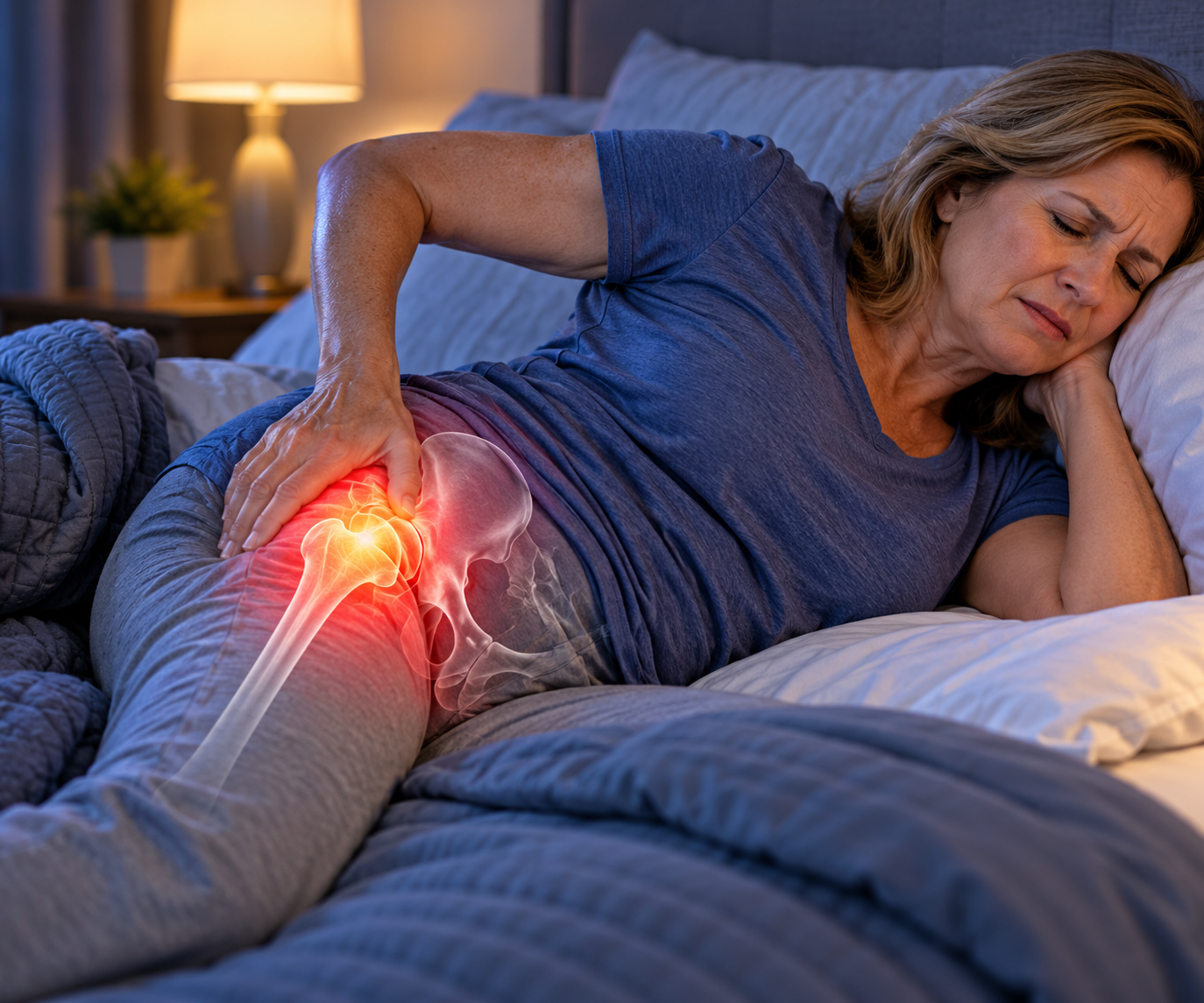
Hip osteoarthritis can occasionally produce pain that is felt primarily around the knee.
This is why evaluating the hip and lower back may be important when knee symptoms do not match the findings of a knee examination.
The location of pain does not always identify its source.
Many people with knee osteoarthritis notice that their pain improves when they stop walking and sit.
Sitting reduces weight-bearing demands on the knee, allowing irritated joint structures and fatigued muscles to rest.
However, the pattern of relief can offer useful clinical information.
Pain that improves primarily by unloading the knee may suggest a mechanical joint-related component.
Leg discomfort that improves particularly when bending forward may suggest lumbar spinal stenosis.
Pain that consistently resolves after stopping exercise, even while remaining upright, can raise concern for a vascular cause.
These patterns are not diagnostic by themselves, but they can help guide a clinical evaluation.
The appropriate approach depends on the underlying cause.
For many individuals with knee osteoarthritis, several conservative strategies may be helpful.
1. Gradually build walking tolerance. Rather than pushing through substantial pain, begin with manageable distances and increase activity progressively.
2. Strengthen your leg muscles. Quadriceps, hamstring, and hip strengthening can improve functional support and walking capacity.
3. Wear supportive footwear. Properly fitted shoes may improve comfort and stability, particularly on hard surfaces.
4. Consider appropriate assistive devices. A cane used on the opposite side of a painful knee may reduce joint loading and improve balance.
5. Address recurring swelling. Persistent effusions should be assessed to determine whether additional treatment is needed.
6. Seek an accurate diagnosis. Symptoms attributed to arthritis may sometimes involve the meniscus, hip, lumbar spine, or circulation.
A physical therapist or qualified healthcare professional can help develop a program suited to your diagnosis and activity goals.
Not necessarily.
Total knee replacement is an established and effective treatment for appropriately selected patients with advanced symptomatic knee osteoarthritis.
However, the decision to proceed with surgery depends on more than the appearance of an X-ray.
Important considerations include:
Many patients can benefit from an individualized non-surgical management plan.
Established approaches include therapeutic exercise, physical therapy, weight management when appropriate, and selected medications or injections.
Some patients also explore additional modalities, including acoustic shockwave therapy, platelet-rich plasma, or laser therapy. Evidence supporting these treatments varies, and they should not be considered proven methods of reversing advanced cartilage degeneration.
Non-surgical treatment does not guarantee that surgery can be avoided.
The goal is to identify appropriate options that may help manage symptoms and support everyday function.
If knee discomfort repeatedly limits how far you can walk, it may be time for a professional assessment.
Evaluation is particularly important when symptoms are becoming more frequent, swelling persists, the knee gives way, or your mobility continues to decline.
Seek urgent medical attention for a hot, markedly swollen knee accompanied by fever, sudden inability to bear weight, or new severe leg symptoms. Sudden coldness or pallor of the foot also requires emergency evaluation.
Walking down a hallway shouldn't have to feel like an endurance test.
Whether your discomfort develops after five minutes or twenty, recurring knee pain is worth understanding.
At Arthritis & Joint Pain Center, we help appropriate patients with chronic knee pain understand what's contributing to their symptoms and explore individualized non-surgical treatment options.
Our goal is to help patients make informed decisions about managing pain, maintaining mobility, and continuing the activities that matter to them.
Because sometimes the biggest challenge isn't climbing a mountain.
It's simply getting from one end of the hallway to the other without pain.