You wake up one morning and notice your knee feels tight.
By afternoon...
👉 It's swollen.
But here's the confusing part:
You didn't fall.
You didn't twist it.
You didn't do anything you can remember that should have injured your knee.
So why does it keep swelling?
For people with chronic knee problems, swelling can occur even without a new injury.
Your knee contains a small amount of fluid that helps the joint move smoothly.
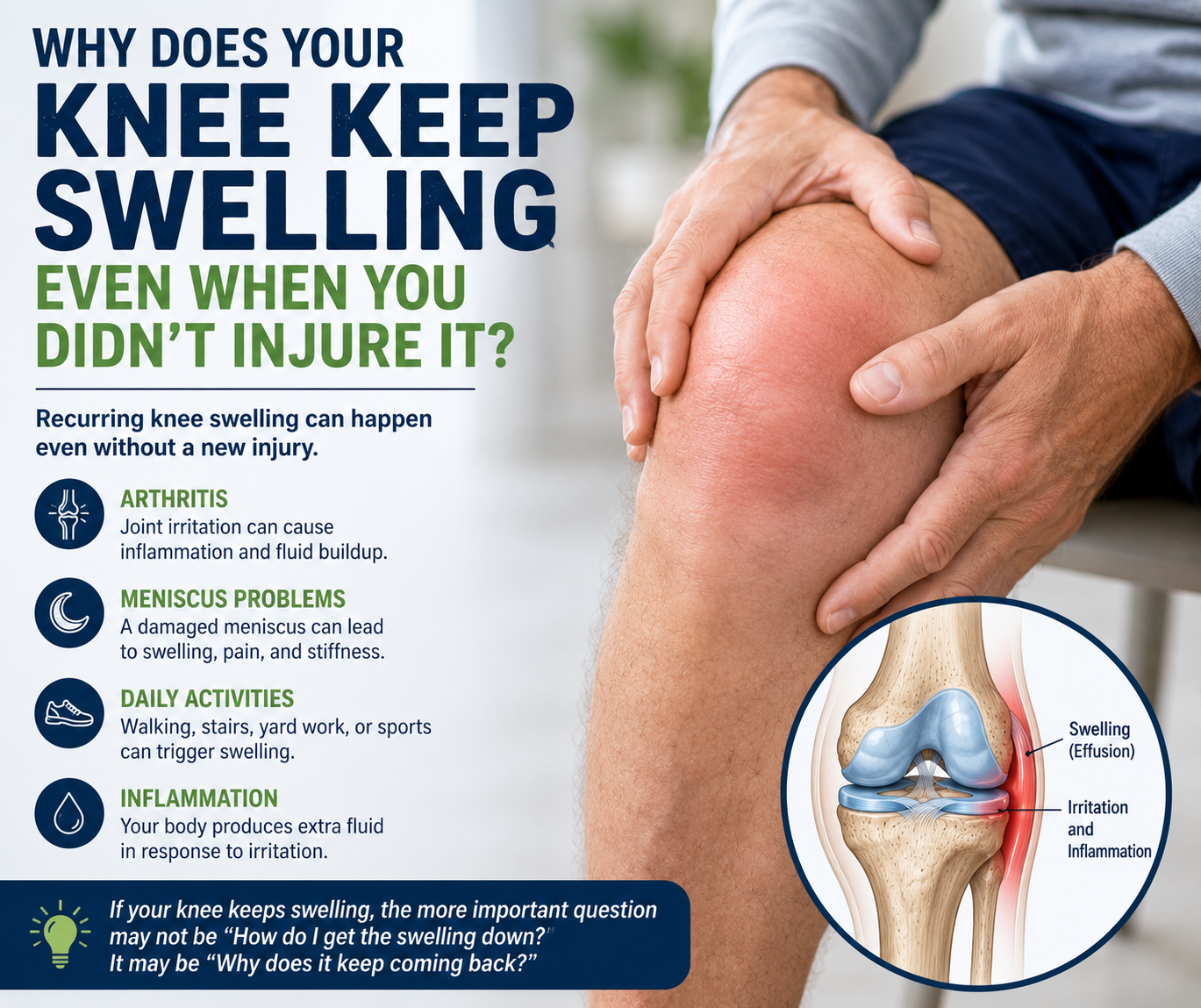
When the joint becomes irritated, the body may respond by producing additional fluid.
This is often called a knee effusion—or what many people simply call "water on the knee."
The result may be:
One common reason for recurring knee swelling is arthritis.
When structures inside an arthritic knee become irritated, inflammation can increase and additional fluid may accumulate.
You might notice swelling after:
🚶 Walking farther than usual
🪜 Using stairs repeatedly
🌳 Working in the yard
🏌️ Playing golf or pickleball
Or sometimes...
👉 There isn't an obvious trigger at all.
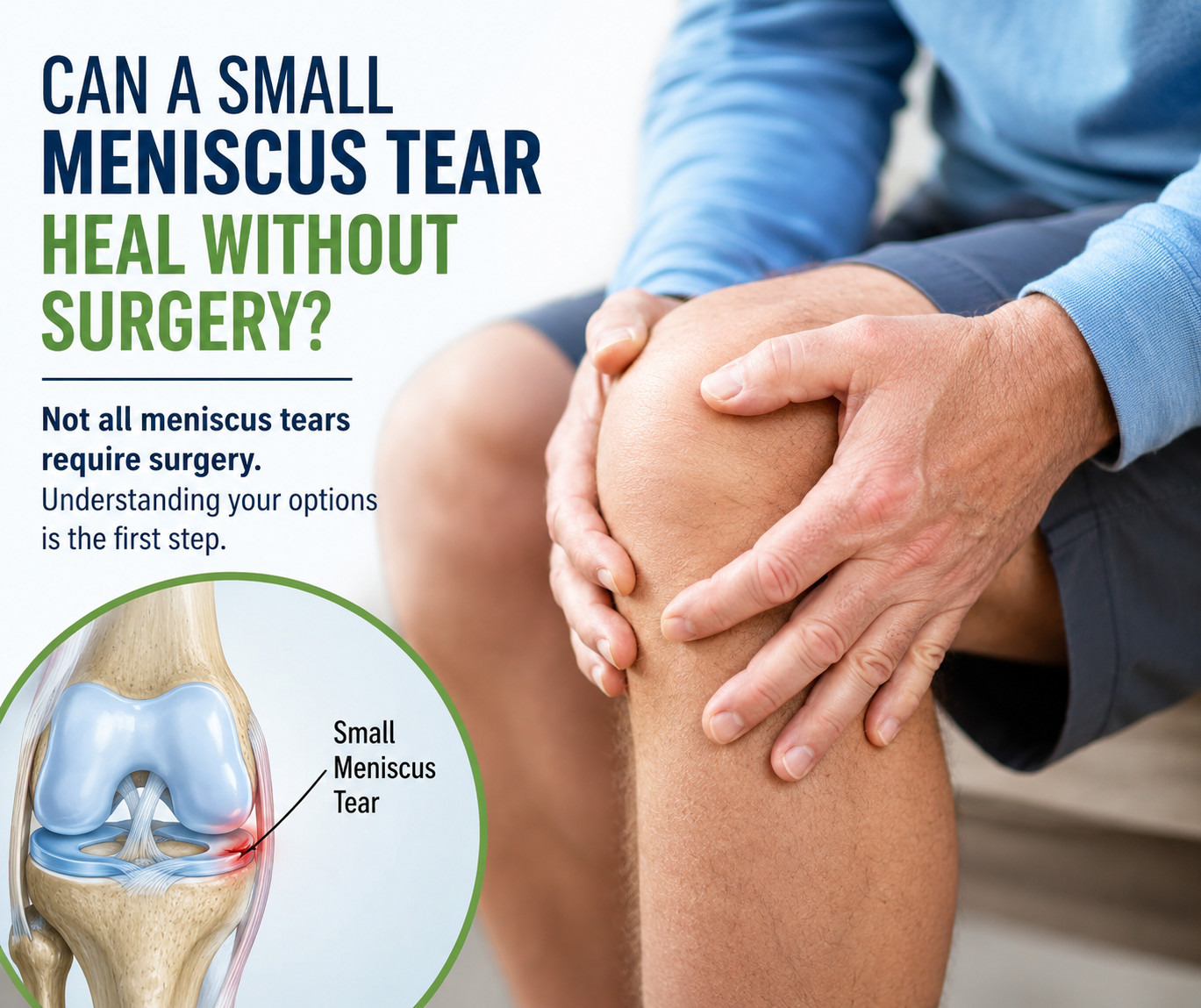
A damaged or irritated meniscus can sometimes contribute to recurring inflammation within the knee.
You may experience swelling along with:
This is another reason it's important to look at the entire knee rather than assuming swelling comes from one specific problem.
As fluid accumulates inside or around the joint, it can create pressure.
People often describe their knee as feeling:
👉 Full
👉 Tight
👉 Heavy
Sometimes the stiffness bothers them more than the actual pain.
Joint irritation can fluctuate.
Your knee may look relatively normal one day and become noticeably swollen after increased activity the next.
Then after reducing activity, the swelling may decrease again.
That cycle can repeat for months or even years.
Removing fluid may sometimes provide temporary relief and can also be useful diagnostically in certain situations.
But if the knee repeatedly fills with fluid, it's important to understand why the swelling keeps returning rather than focusing only on the fluid itself.
Not every swollen knee is simply arthritis.
Seek medical evaluation promptly if swelling:
🚩 Appears suddenly and is severe
🚩 Follows a significant injury
🚩 Is accompanied by redness or unusual warmth
🚩 Occurs with fever or feeling ill
🚩 Makes it difficult or impossible to bear weight
Those symptoms can indicate problems that require more immediate evaluation.
A swollen knee doesn't always mean you recently injured it.
Arthritis, meniscus problems, inflammation, and other joint conditions can cause fluid to repeatedly accumulate.
If your knee keeps swelling, the more important question may not be:
“How do I get the swelling down?”
It may be:
👉 “Why does it keep coming back?”
At Buffalo Arthritis & Joint Pain Center, we help patients with chronic knee pain explore non-surgical treatment options when appropriate, with the goal of reducing pain and improving mobility.
Recurring knee swelling is your joint telling you something. Understanding why it's happening is the first step.