You're making dinner.
Washing dishes.
Brushing your teeth.
Standing at the bathroom sink.
At first, your back feels fine.
Then five or ten minutes go by and you start shifting your weight.
You lean against the counter.
Maybe you put one foot on the cabinet ledge.
Eventually, you're thinking:
“Why does standing still hurt my back more than walking?”
It's a surprisingly common complaint.
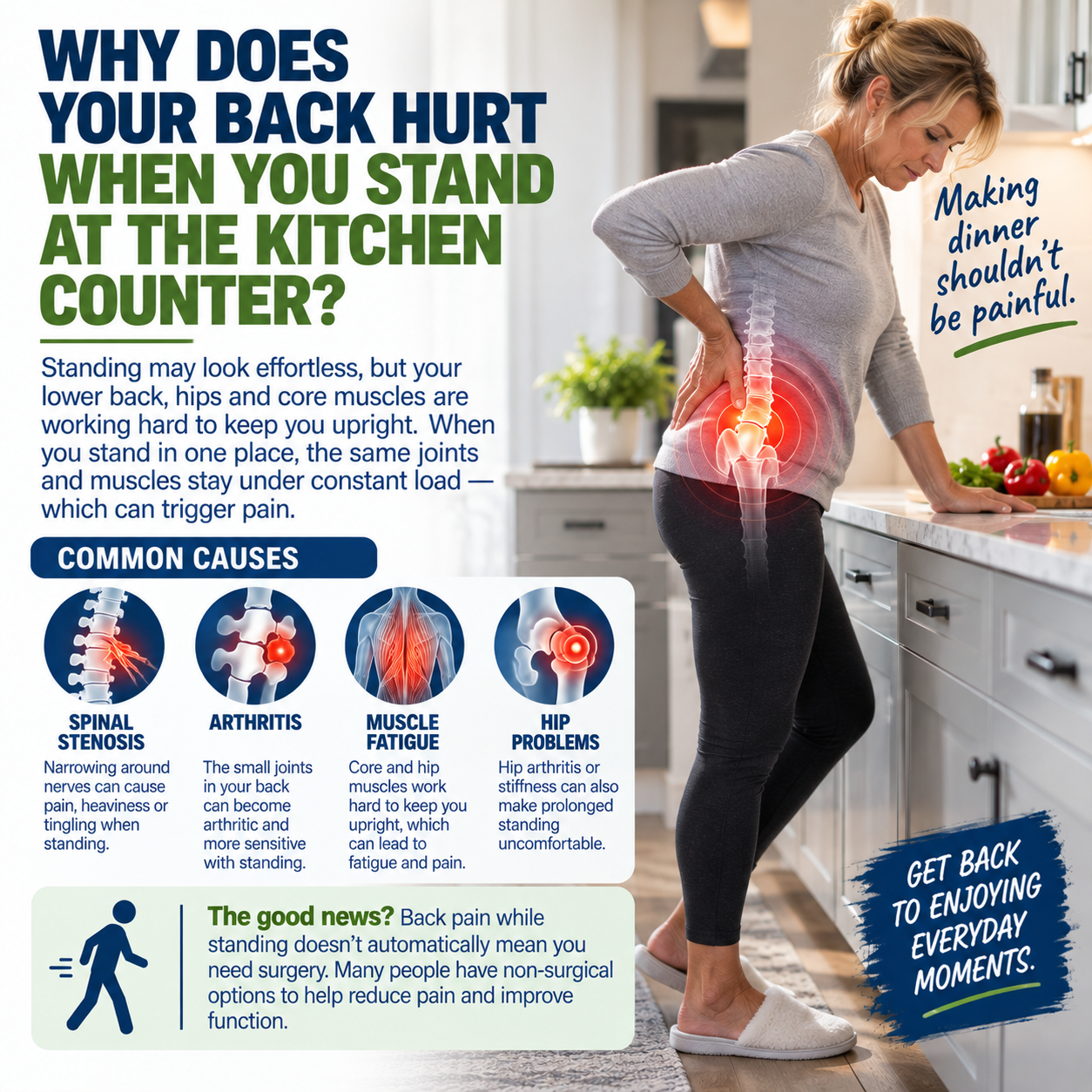
Standing may look effortless, but your lower back, hips and core muscles are continuously working to keep you upright.
When you're walking, your body is constantly changing position.
But when you stand in one place, the same muscles and joints may remain under relatively constant load.
For someone with an irritated or arthritic lower back, that can become uncomfortable quickly.
Here's an interesting clue.
Some people notice that their back or legs feel better when they:
👉 Lean forward onto the kitchen counter
👉 Rest their hands on the sink
👉 Put their elbows on a shopping cart
👉 Sit down for a few minutes
👉 Bend forward slightly
That change in position may reduce stress on certain structures in the lower back.
For some people, particularly those with lumbar spinal stenosis, slight forward bending may temporarily relieve symptoms.
Lumbar spinal stenosis refers to narrowing in areas of the lower spine where nerves travel.
It becomes more common with age and may occur alongside degenerative changes such as arthritis.
Symptoms can include:
🦵 Aching or heaviness in the legs
🔥 Burning into the buttocks or thighs
🐜 Tingling or numbness
😣 Lower-back discomfort
🚶 Difficulty standing or walking for longer periods
One classic pattern is symptoms that worsen with prolonged standing or walking and improve when sitting or leaning forward.
But not everyone with back pain while standing has spinal stenosis.
The small joints in the back, called facet joints, can develop arthritic changes just like knees, hips and other joints.
Standing upright may place more stress through these joints.
You might notice pain when:
🍳 Cooking
🧼 Washing dishes
🪥 Standing at the bathroom sink
🛒 Waiting in a checkout line
💬 Standing and talking with someone
Sometimes walking actually feels better because you're continuously changing the forces through the spine.
Not every case of standing-related back pain comes directly from the spine.
Tight or weak muscles around the hips and trunk can affect how forces are distributed through the lower back.
You may also gradually shift into positions that feel easier.
For example:
Do you always put one foot up when standing at the counter?
Many people do this without even realizing it.
Your body may have figured out that changing your hip and pelvic position makes standing more comfortable.
When you sit, several things change at once.
Your legs no longer have to support your full body weight.
Your spinal position changes.
Your muscles can relax differently.
And if slight forward bending relieves pressure around irritated nerves, sitting may provide fairly rapid relief.
That's why someone might say:
“I can stand for ten minutes, but once I sit down for a minute or two, I'm ready to go again.”
That pattern is useful information when evaluating what's causing the symptoms.
Sometimes it's difficult to tell.
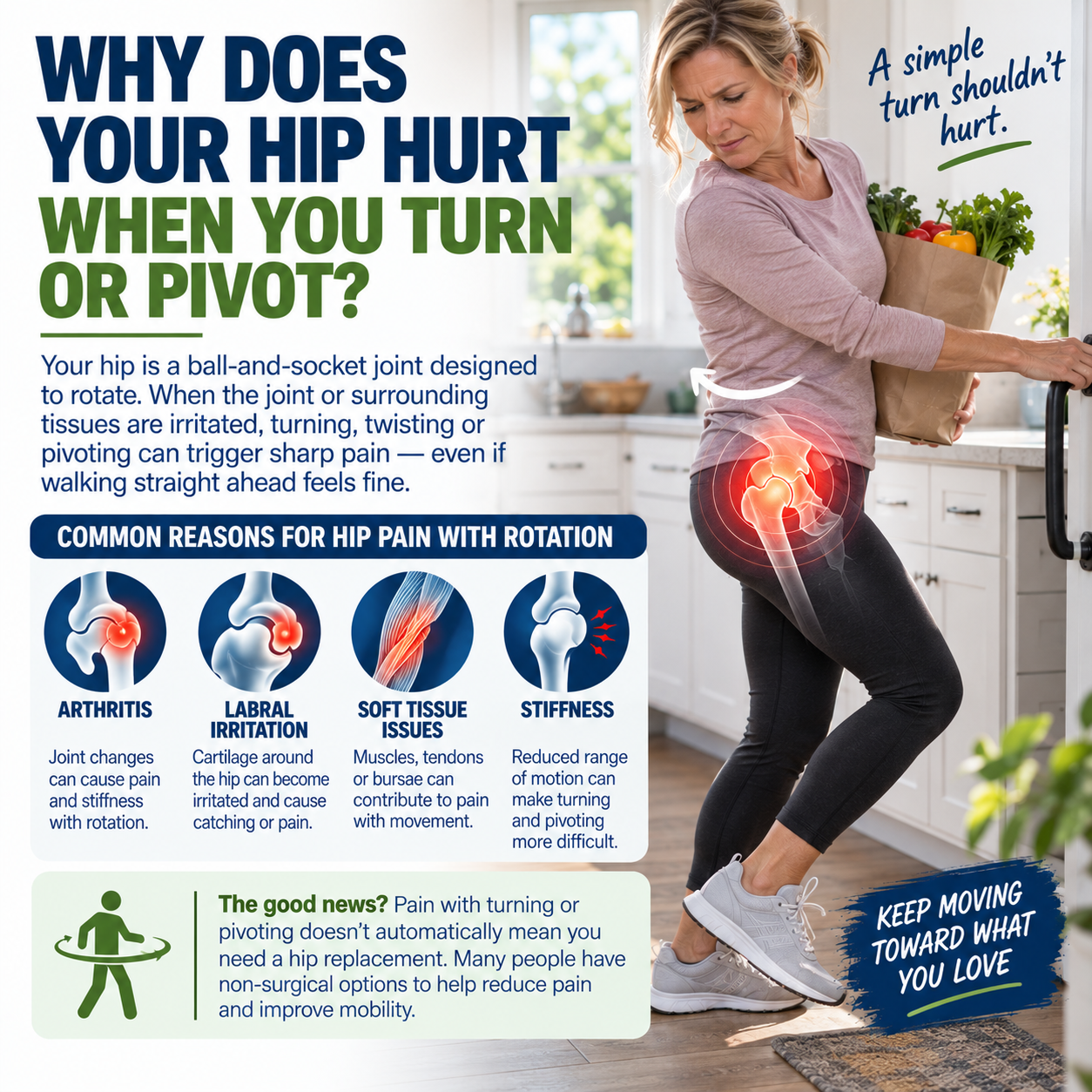
Hip arthritis can also make prolonged standing uncomfortable.
Hip problems are more likely to produce symptoms around the groin, front of the hip or upper thigh, although pain patterns vary.
Back and nerve problems may cause pain into the buttock or leg, sometimes accompanied by burning, tingling or numbness.
And it's possible to have both hip and lower-back problems at the same time.
No.
Back pain while standing doesn't automatically mean you have severe spinal damage or need surgery.
The first step is figuring out what's actually contributing to the problem.
Depending on the cause and severity, treatment may include activity modifications, appropriate exercise or physical therapy, medications and other non-surgical approaches.
Consider an evaluation if you're noticing:
🚩 Your standing tolerance is getting shorter
🚩 Pain is increasingly traveling into your buttock or leg
🚩 Numbness or tingling is developing
🚩 Your legs feel unusually heavy or weak
🚩 Walking or everyday activities are becoming limited
🚩 Symptoms aren't improving or continue returning
Seek urgent medical attention for new bowel or bladder problems, numbness around the groin or saddle area, or rapidly worsening leg weakness.
If you can walk around reasonably well but standing at the kitchen counter has you searching for somewhere to sit, don't dismiss it as simply getting older.
Your symptoms may be related to arthritis, spinal stenosis, muscular factors or another problem involving the lower back.
At Arthritis & Joint Pain Center, we help appropriate patients with chronic back and leg pain understand what's contributing to their symptoms and explore non-surgical treatment options when appropriate.
Because making dinner shouldn't feel like an endurance event.