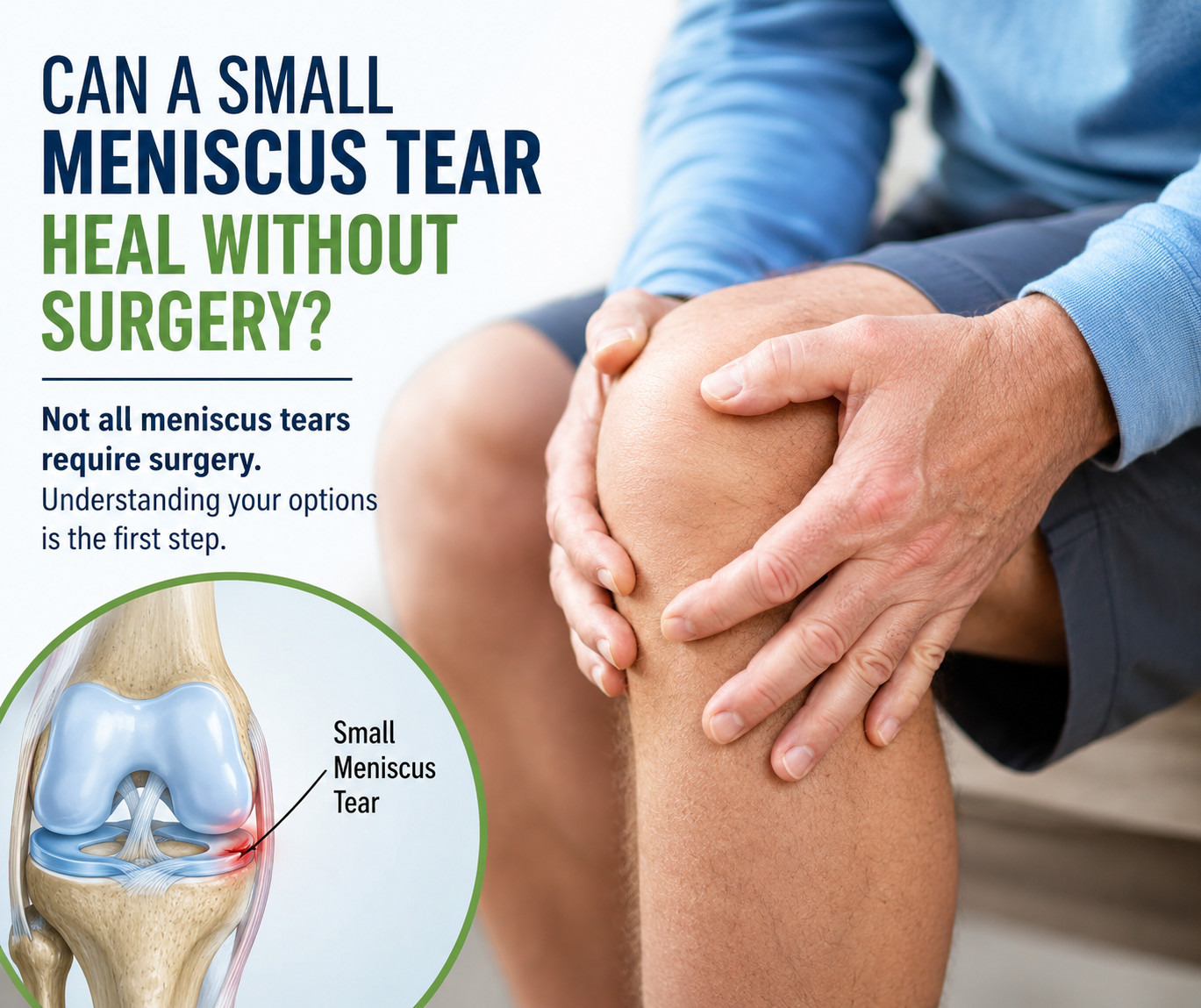
Being told you have a meniscus tear can sound serious.
For many people, the first thought is:
👉 “Does this mean I need knee surgery?”
Not necessarily.
Small meniscus tears are common, particularly as we get older, and finding a tear on an MRI doesn't automatically mean surgery is the next step.
Each knee contains two menisci, a rubbery, C-shaped pieces of cartilage that sit between the thigh bone and shin bone.
They help:
Over time, the meniscus can become more vulnerable to tearing.
Some meniscus tears happen suddenly.
You twist your knee playing a sport or working in the yard and immediately know something happened.
But other tears develop gradually.
You may simply notice:
😣 Pain along the inside or outside of the knee
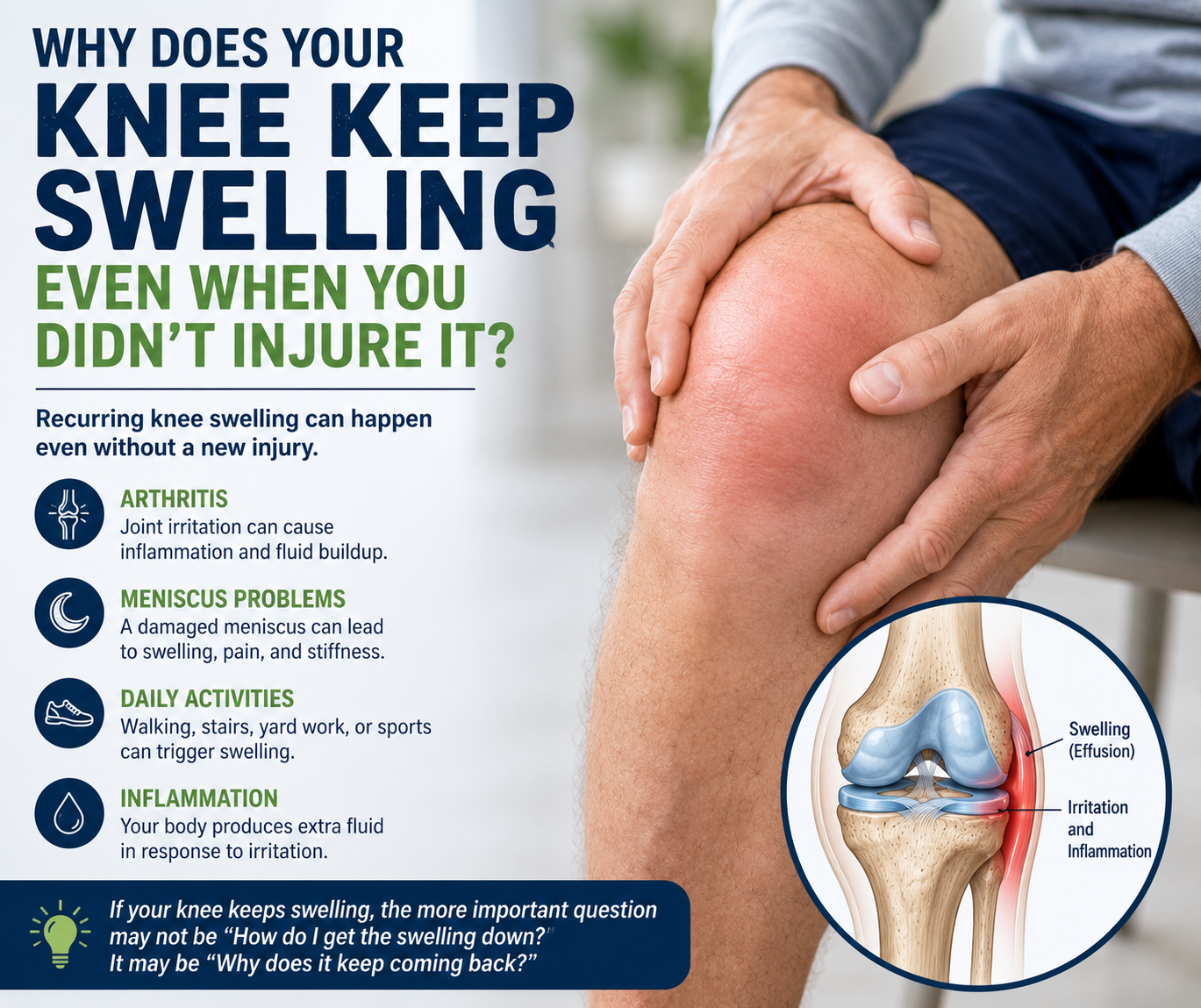
🦵 Swelling after activity
🪑 Stiffness after sitting
🪜 Pain using stairs
🔄 Discomfort when twisting or turning
There may never have been one obvious injury.
It depends partly on where the tear is located.
The outer portion of the meniscus has a better blood supply, so some small tears in this area have greater healing potential.
The inner portion has much less blood supply, which can make natural healing more difficult.
But there's an important distinction:
👉 A tear doesn't necessarily have to completely heal on an MRI for your symptoms to improve.
Some people can function very well despite having a meniscus tear.
This is especially important as we get older.
Meniscus changes and tears can be found on MRIs in people who aren't experiencing significant knee pain.
So simply seeing the words “meniscus tear” on an MRI doesn't necessarily prove that the tear is responsible for all of your symptoms.
Your:
all need to be considered.
No.
Depending on the type of tear, symptoms, age, activity level and overall condition of the knee, many meniscus problems may initially be managed without surgery.
For some patients, surgery may still be appropriate, particularly with certain traumatic tears or significant mechanical problems.
But an MRI showing a small tear isn't automatically a reason to have an operation.
This is another important consideration.
Meniscus tears frequently exist alongside arthritis.
If both are present, determining what's actually responsible for your symptoms becomes especially important.
Treating an MRI finding without considering the condition of the entire knee may not address the real source of the problem.
Pay particular attention if you're experiencing:
🚩 Recurrent swelling
🚩 Increasing pain
🚩 Difficulty bearing weight
🚩 A knee that repeatedly gives way
🚩 Significant loss of motion
A knee that becomes truly locked and cannot normally bend or straighten also deserves prompt evaluation.
A small meniscus tear doesn't automatically mean your knee is badly damaged and it doesn't automatically mean you need surgery.
Some tears have the potential to heal, while in other cases symptoms can improve even though the tear remains visible on imaging.
The key is determining whether the meniscus tear is actually responsible for your symptoms and understanding the condition of the entire knee, not simply one line on an MRI report.
At Buffalo Arthritis & Joint Pain Center, we help patients with chronic knee pain explore non-surgical treatment options when appropriate, with the goal of reducing pain, improving mobility, and keeping them active.
👉 A small tear on an MRI doesn't necessarily have to become a big decision.